
Responsible Cruising: Cruise Lines Are Now Invited to Join in for Safer Whales, Cleaner Air, and a Quieter Ocean
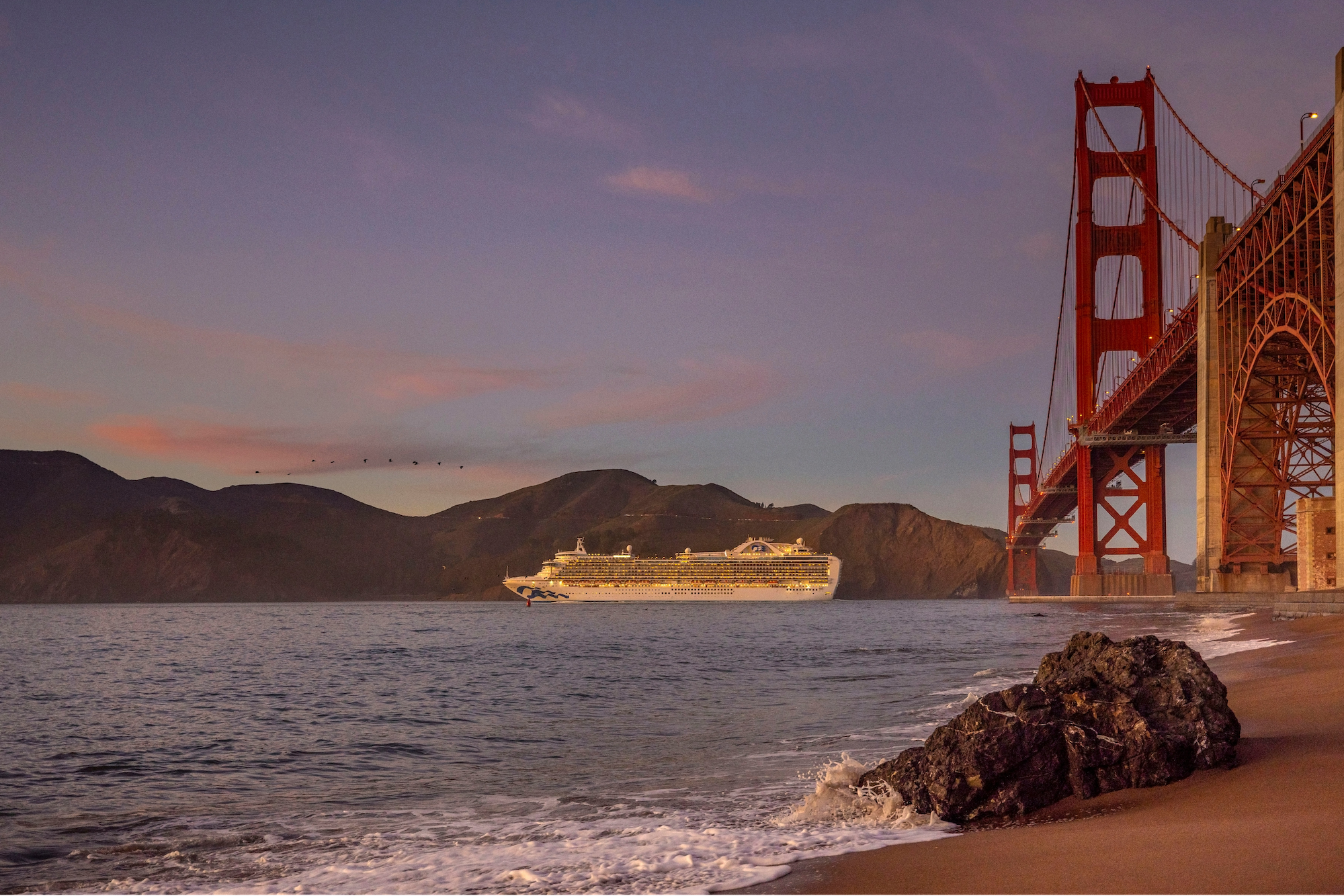
Cruise lines are some of the most visible and fastest-moving ships on the West Coast. (Photo by Leo_Visions on Unsplash)
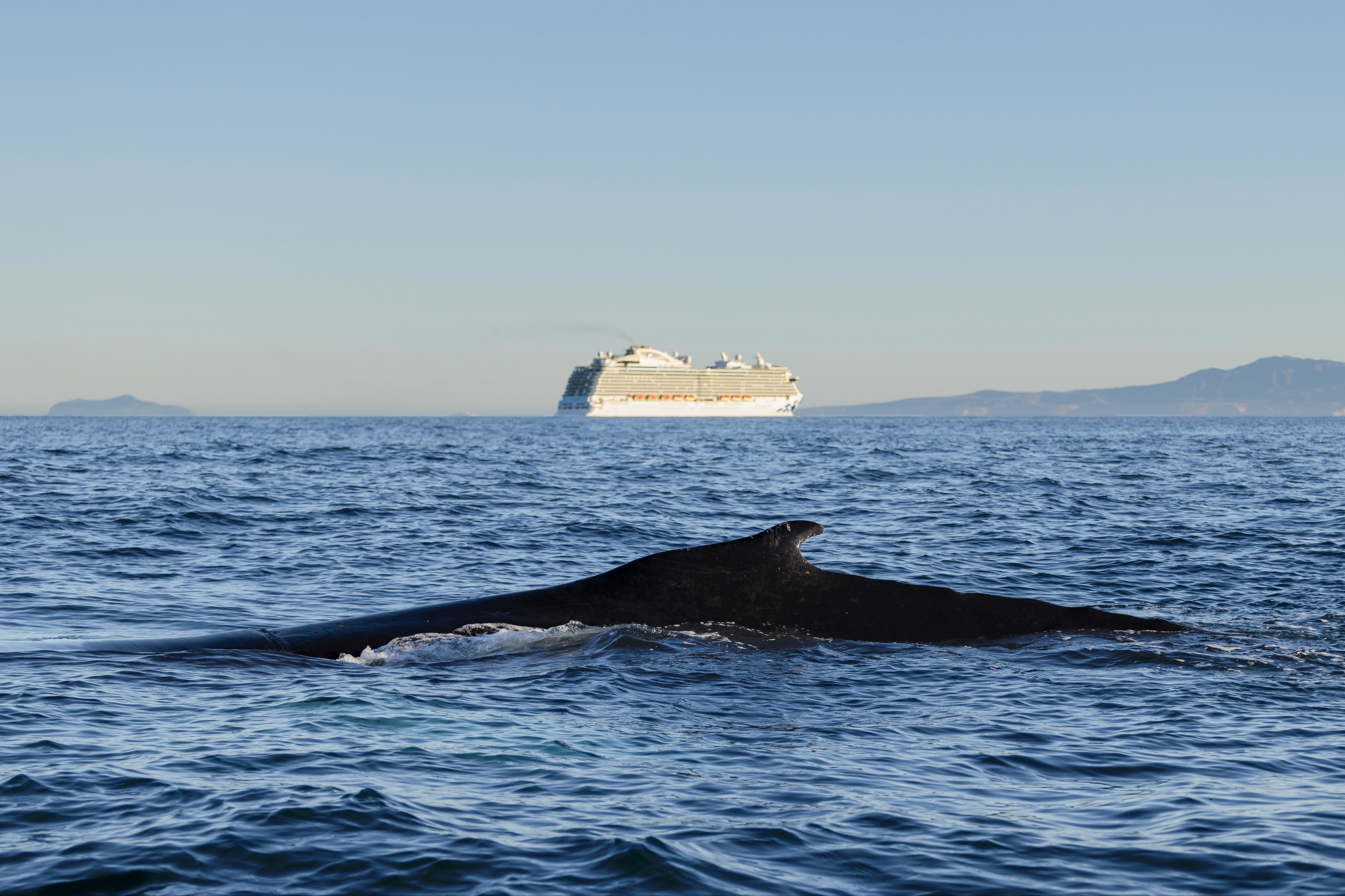
California coast is a world-renowned destination for travel, and also a critical habitat for endangered whales.(Photo by Adam Ernster)
Blue Whales and Blue Skies Program Opens to Cruise Lines with California Routes
BWBS is a collaborative effort by regional coastal air districts, the California Marine Sanctuary Foundation, NOAA National Marine Sanctuaries, and Benioff Ocean Science Laboratory to reduce risks to endangered whales and protect air quality. Since launching in 2014, BWBS has worked with more than 50 global cargo shipping lines to incentivize vessel speed reduction to 10 knots or less in key whale habitats.
In October 2025, BWBS was recognized for its significant environmental benefits when Gov. Gavin Newsom signed into law Assembly Bill 14. Authored by Assemblymembers Gregg Hart (Santa Barbara), Steve Bennett (Ventura), and Damon Connolly (San Rafael), AB 14 expands BWBS into a statewide program.
In 2026 the BWBS coalition is expanding eligibility to include cruise lines as a unique opportunity for the industry to support California’s environmental stewardship.
11 Years of Cumulative Impact: Data-Driven Conservation
Each year, participating vessels collectively travel hundreds of thousands of nautical miles at whale-safer speeds through designated Vessel Speed Reduction (VSR) zones, which overlap with critical habitat for endangered blue, fin, and humpback whales. These cumulative actions, verified through Automatic Identification System (AIS) data and independent analysis, translate into measurable benefits for marine biodiversity, coastal air quality, and public health.
Since the program launched in 2014, the following environmental benefits have been achieved:
> 1,596,008 nautical miles of whale-safer transits
> 5,900 tons of smog-forming NOx emissions avoided
> 35 tons of total diesel particulate matter avoided
> 200,000 metric tons of regional greenhouse gas emissions avoided
> A 4.1 decibel reduction in participating vessels’ source noise levels
> A 50% reduction in fatal ship strike risk
As maritime activity along the California coast continues to evolve, the program has continued to assess where additional sectors can contribute to protecting California’s marine biodiversity.
Responsible Cruising Can Drive Environmental Benefits for Whales and Air Quality
Previously, cruise lines were not eligible to join BWBS. Most cruise ships operate using diesel-electric propulsion systems that provide both propulsion and auxiliary power. This configuration supports substantial onboard passenger amenities and results in power demands that are often five to ten times higher than those of other ocean-going vessels.
To ensure that opening the program to this class of vessels would drive environmental benefits around air quality, BWBS worked with research partner Starcrest Consulting Group, an environmental services company, to conduct a more detailed evaluation of cruise vessel data and baseline operating behavior. The updated analysis demonstrated that, on average, given the existing fleets transiting the region, incentivizing cruise ships to transit at 10 knots or less is expected to benefit air quality, including a net reduction of smog-forming NOx emissions, as well as contribute to a safer habitat for whales.
In 2024, during the BWBS season, 38 cruise ships from 17 companies traveled approximately 24,000 nautical miles through the California VSR zones. While cruise ships accounted for roughly 3% of total distance traveled within VSR zones, they represented approximately 6% of total ocean-going vessel emissions in those same areas. This difference highlights a meaningful opportunity for additional environmental improvement.
Average cruise ship speeds outside the VSR season range from 14 to 15 knots, with some vessels averaging up to 20 knots. Research shows that when large vessels reduce speed from baseline for 15 knots to whale-safer 10 knots, the risk of a fatal ship strike decreases by 50%. As a result, cruise vessels’ cooperation with VSR represents a significant opportunity to protect whales and benefit air quality.
Transparency and Performance Metrics Remain the Same
Participation by cruise ships will follow the same framework applied to all other participating vessel types in the BWBS VSR request. The program remains voluntary, uses the same AIS-based performance metrics, applies the same analytical methods, and maintains the same transparency and verification standards.
Participating cruise lines will receive monthly performance reporting, third-party verified environmental benefits data suitable for environmental and social governance (ESG) and sustainability reporting, and recognition through program communications and events.
“Cruise ships are historically some of the fastest-moving large vessels in our region,” said California Marine Sanctuary Foundation Director of Marine Resource Protection Progrm Jess Morten. “Every year we see more and more cruise lines proactively reaching out to understand where and when they should reduce speeds to keep whales safe and for opportunities to get more involved. We look forward to welcoming them in for the 2026 season and are excited to see what we can accomplish together."
Invitation to Enroll for 2026
Cruise lines operating along the U.S. West Coast in 2026 are invited to participate in the program and contribute to continued improvements in whale protection and air quality. Cruise lines are encouraged to join prior to the start of the 2026 season to ensure they receive all program updates and monthly reports on their fleet performance; late enrollment will be considered.
As BWBS prepares for the 2026 season, program zones and timing may be updated as part of California’s statewide VSR expansion under AB14. Cruise lines are encouraged to contact the program team to ensure they are included on the BWBS mailing list and receive the latest information on program updates, eligibility, and enrollment details.
For more information: www.bluewhalesblueskies.org
For cruise line enrollment: https://bluewhalesblueskies.org/cruise-line-program/
To receive our newsletter: https://bluewhalesblueskies.org/ambassador-program/get-involved/
Becca Tucker
Protecting Blue Whales and Blue Skies
becca@californiamsf.org
Legal Disclaimer:
EIN Presswire provides this news content "as is" without warranty of any kind. We do not accept any responsibility or liability for the accuracy, content, images, videos, licenses, completeness, legality, or reliability of the information contained in this article. If you have any complaints or copyright issues related to this article, kindly contact the author above.
